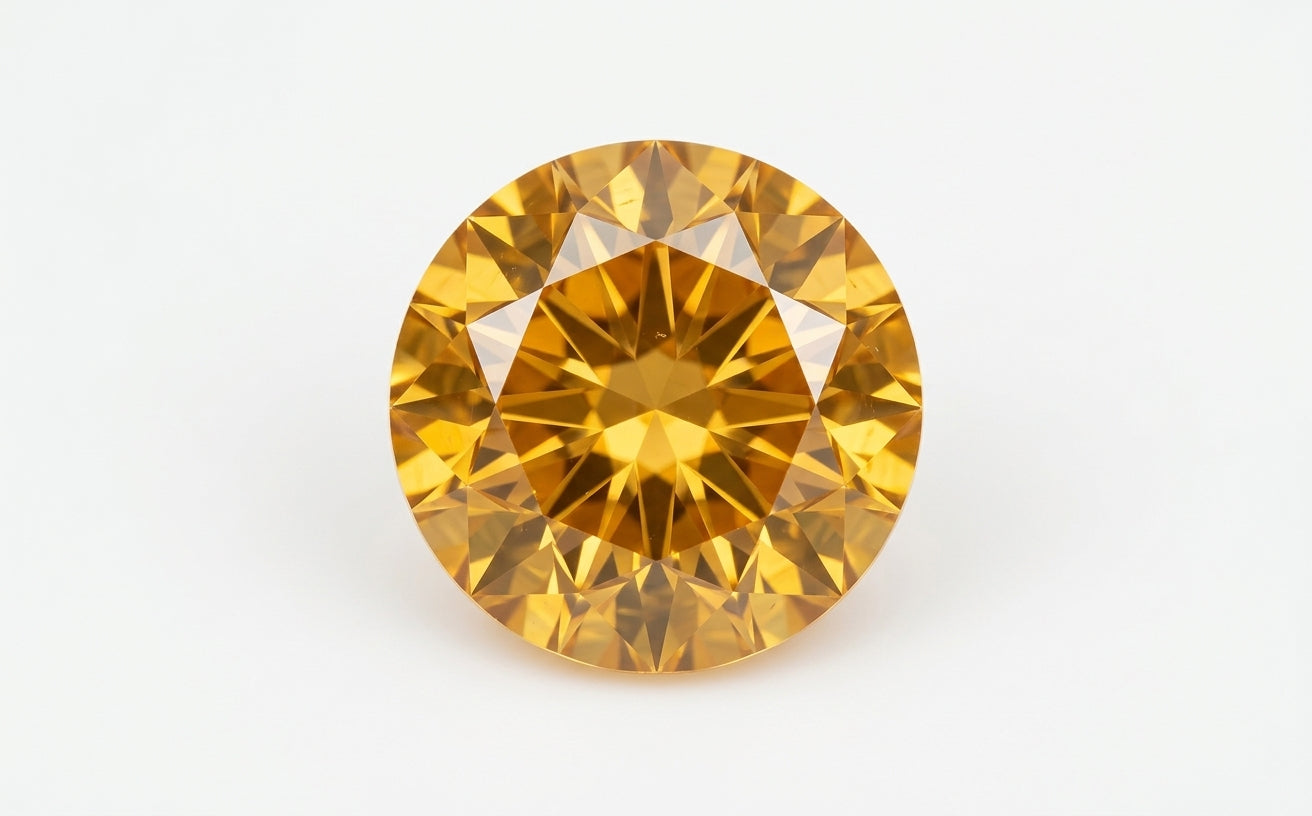
The Complete Diamond Guide4Cs, color, clarity, and rarity
Diamonds represent the most systematically graded gemstones globally. The Gemological Institute of America established a standardized evaluation framework that enables consistent comparison across stones and forms the basis for international diamond pricing.
What distinguishes diamonds is the precision with which their quality can be measured.
Diamonds represent the most systematically graded gemstones globally. The Gemological Institute of America established a standardized evaluation framework that enables consistent comparison across stones and forms the basis for international diamond pricing.
What distinguishes diamonds is the precision with which their quality can be measured. Every diamond balances measurable attributes, and understanding these characteristics separates informed purchases from ordinary ones.
Formation and why diamonds are rare
Diamonds develop deep within Earth’s mantle under extreme pressure and temperature. Carbon atoms compress into a tightly bonded crystal lattice, producing the hardest naturally occurring material known to science.
However, formation alone doesn’t ensure accessibility. Diamonds must reach the surface through rare volcanic events creating kimberlite pipes. Only a small percentage of these pipes contain diamonds, with an even smaller percentage yielding gem-quality material.
This combination of conditions makes natural diamonds rare, particularly in larger sizes and superior qualities.
A rough diamond crystal, before cutting.
Fancy colors
Fancy colored diamonds: the highest level of rarity
While most diamonds are valued for their lack of color, some develop color through unique geological conditions. These fancy colored diamonds rank among the world's rarest gemstones. Drag the bar or pick a color to compare.
Yellow
From soft canary tones to deep golden yellow. The more nitrogen in the crystal, the stronger the color.
Color cause
Nitrogen impurities.
Treatment
Some yellow diamonds are made by treatment, so certification matters.
Rarity and value
The most common fancy color, and the most accessible.
Good to know
A stone that falls outside the D-to-Z range is graded as a fancy color instead.
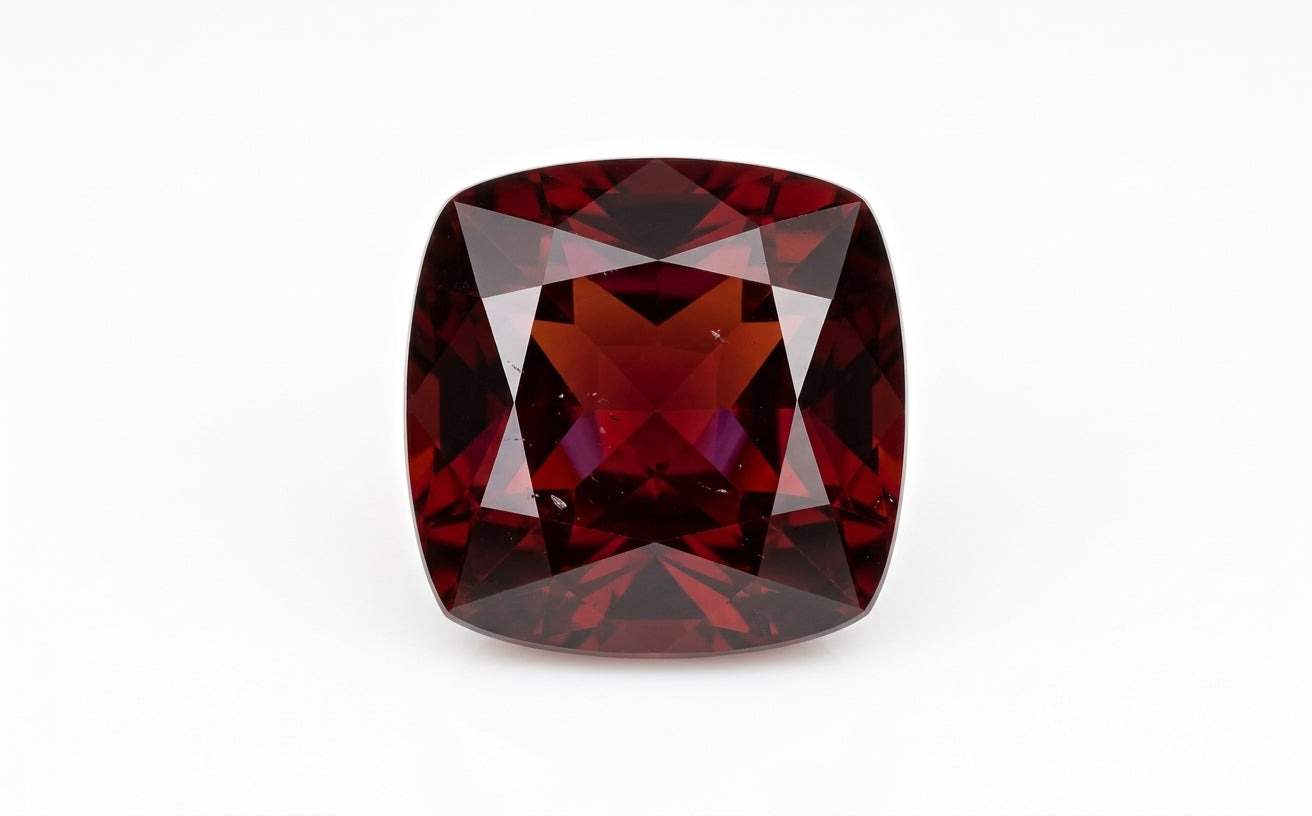
Brown
Warm tones from light champagne to deep cognac and chocolate.
Color cause
Distortion of the crystal lattice, seen as fine parallel grain lines.
Treatment
Brownish diamonds are often the starting material for HPHT color treatment.
Rarity and value
The most common fancy color, and generally the most affordable.
Good to know
Trade names such as cognac and chocolate became popular in the 1980s.
Red
A true red diamond is almost never seen. Only a small number are known to exist.
Color cause
Structural distortion in the crystal lattice. The exact cause is still being studied.
Treatment
Certification is essential at this level.
Rarity and value
Fewer than 30 true red diamonds are known globally. A small red of just over 1 carat sold at Christie's for over $1 million per carat.
Good to know
The Moussaieff Red, at 5.11 carats, is widely considered the largest known red diamond. Its estimated value exceeds $20 million.
Pink
From pale blush to vivid pink, often with a slightly warm or purplish cast.
Color cause
Structural distortion in the crystal lattice.
Treatment
Color can be enhanced, so certification is important.
Rarity and value
The Argyle Mine, which produced the vast majority of the world's supply, closed in 2020. That permanently limited availability.
Good to know
The Pink Star, a 59.60-carat stone, sold for $71 million in 2017.
Blue
Steely to deep blue. A deeper blue means more boron in the crystal.
Color cause
Boron impurities.
Treatment
Blue can also come from radiation or hydrogen, and treated blues exist.
Rarity and value
Extremely rare.
Good to know
Historically from India, and in recent years from the Cullinan mine in South Africa.
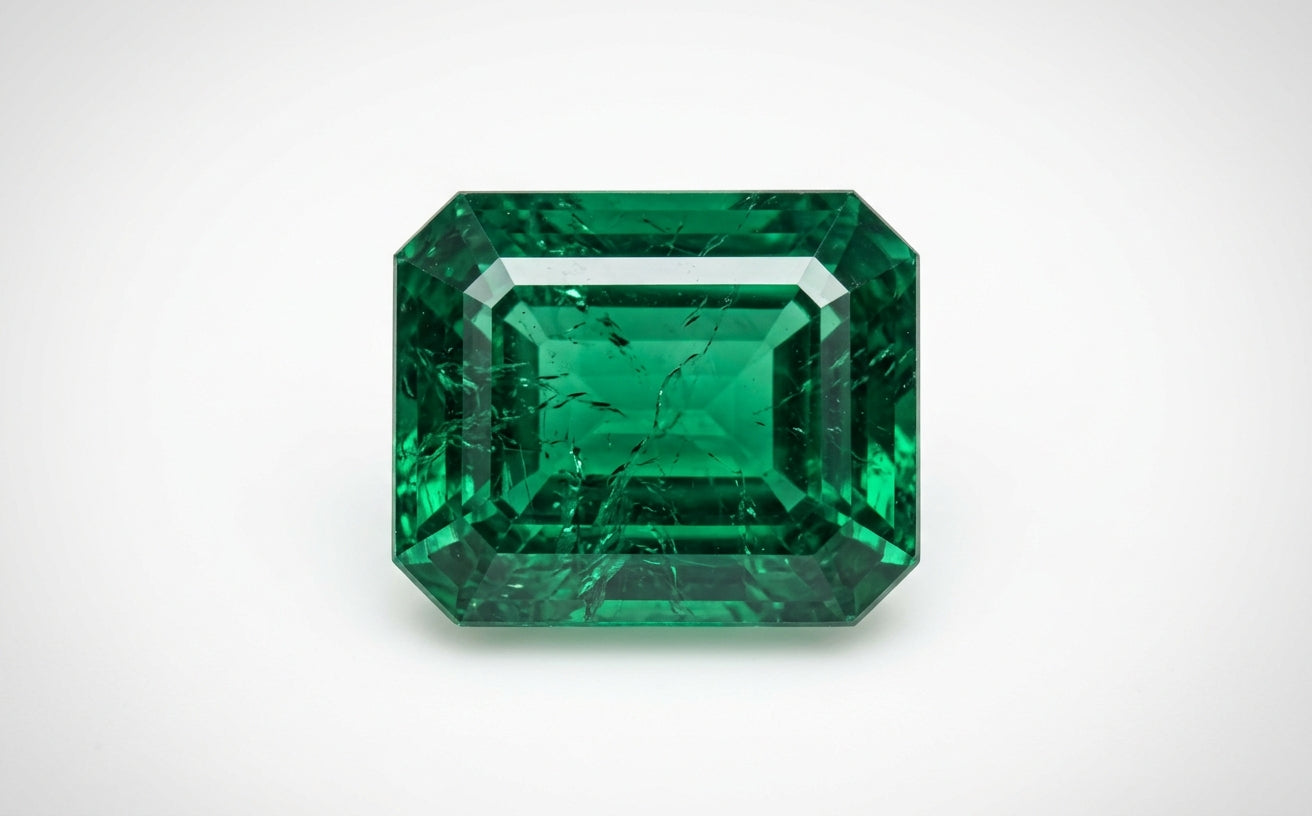
Green
Soft mint to deep green, often with a slightly yellowish or bluish cast.
Color cause
Natural radiation exposure, which displaces carbon atoms in the crystal.
Treatment
Irradiation can also produce green, so these stones are always examined carefully.
Rarity and value
Natural green diamonds are extremely rare.
Good to know
The origin of a green diamond can be hard to determine.
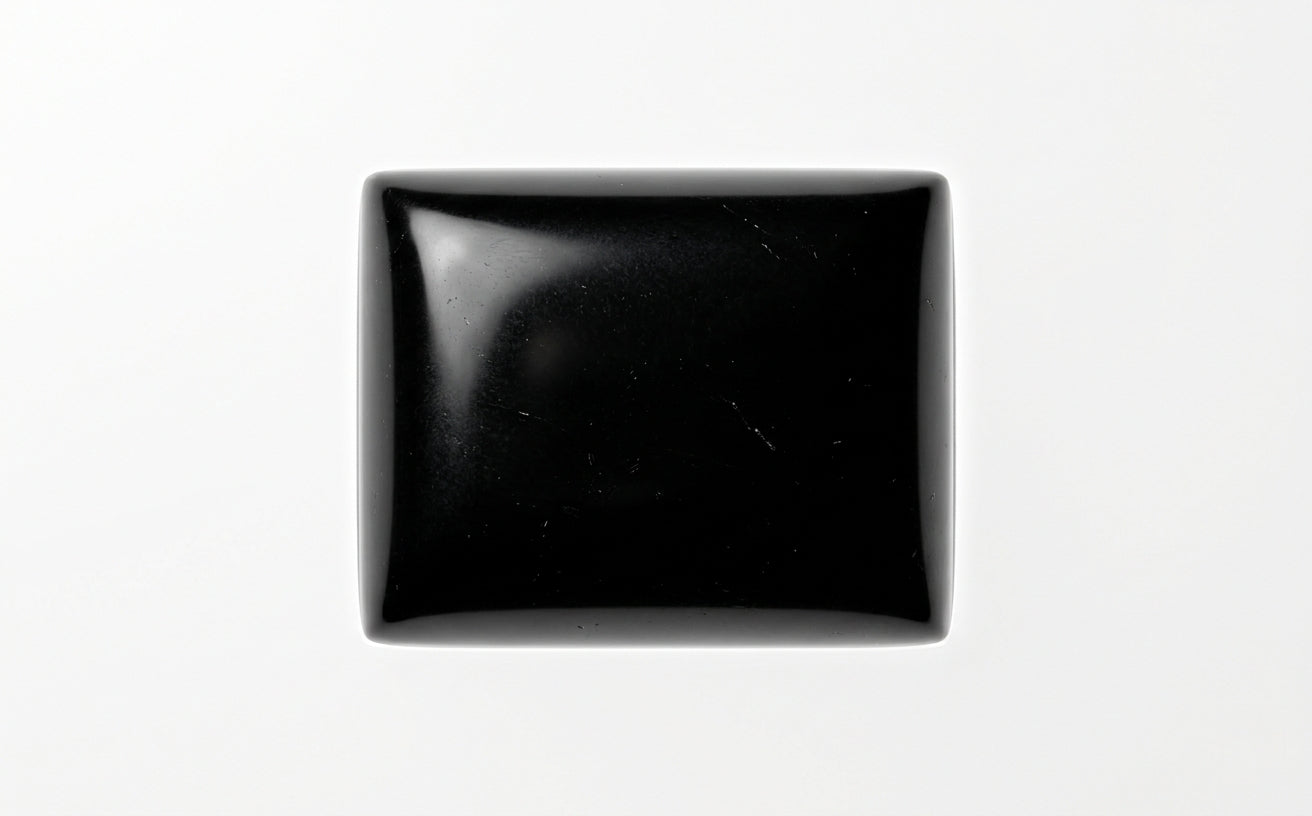
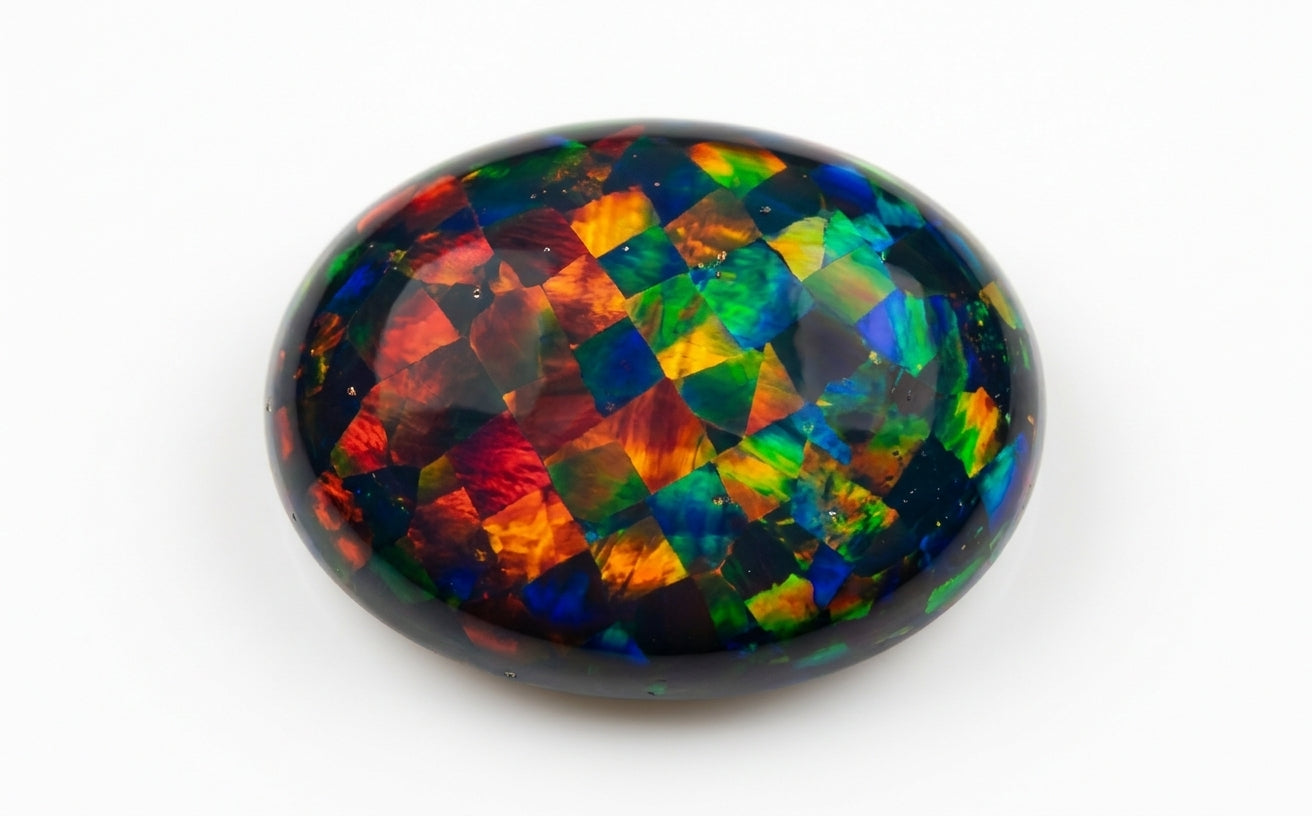
Black
An opaque, inky black that reflects light with a metallic sheen.
Color cause
Dense mineral inclusions such as graphite, pyrite and hematite, or fractures stained black.
Treatment
Certification will note whether the color is natural or treated.
Rarity and value
Uncommon.
Good to know
The color comes from what is inside the stone rather than from the crystal itself.
Unlike white diamonds, fancy diamonds are graded on color intensity: Faint to Light, Fancy Light to Fancy, Fancy Intense / Fancy Vivid (the most valuable), and Fancy Deep / Fancy Dark. Colors shown are illustrations.
Properties
Hardest of all, but not unbreakable
Diamond sits at 10 on the Mohs scale, the top of the scale. Tap or hover any number to compare.
Mohs measures scratch resistance, from talc (1) to diamond (10).
Hardness & wearability
With a hardness of 10 on the Mohs scale, diamond is the hardest natural gemstone, and only another diamond can scratch it. That makes it an excellent choice for everyday rings and other frequently worn pieces.
Hardness is not the same as toughness, though. A diamond can still chip if it takes a sharp knock at the wrong angle, because it breaks cleanly along certain planes inside the crystal. A well-made setting that protects the girdle helps.
Hardness is resistance to scratching. Toughness is resistance to breaking. Diamond leads the first, but a hard blow can still chip it.
Treatments: what to know before you buy
Most treatments are disclosed on a grading report, and some change how a diamond should be cared for. Select a treatment to explore it.
Illustration: laser drilling, filled fractures and enhancement glow by treatment type (schematic)
Level of enhancement
The 4Cs
The 4Cs: understanding diamond quality
The 4Cs—cut, color, clarity, and carat weight—establish the universal standard for diamond grading. Each category plays a distinct role, but their interaction determines ultimate value.
Cut proves most important because it controls light behavior inside the diamond. When proportions align correctly, light enters through the top, reflects internally, and returns to the eye as brilliance and fire.
An Excellent cut diamond appears significantly more vibrant than a poorly cut diamond, even with identical color and clarity grades. Cut should always be prioritized when selecting a diamond.
Try it: see how cut grade changes the light
GIA grades cut on standard round brilliants. Fancy shapes such as oval, pear or emerald do not receive a formal cut grade.
GIA weighs brightness, fire and scintillation together with weight ratio, durability, polish and symmetry when it grades the cut of a round brilliant.
Parts of a diamond and why they matter
A diamond’s structure determines how it handles light. The table serves as the primary surface where light enters, while the crown and pavilion work together to refract and reflect that light.
When angles between these components are properly aligned, light is returned to the viewer efficiently. Misalignment causes light escape and brilliance loss. This connection explains why cut quality and structural proportions are directly related.
The GIA color, clarity, carat and cut scales side by side.
Popular diamond shapes
Round
Princess
Cushion
Emerald
Asscher
Oval
Pear
Marquise
Heart
Diamond color grading evaluates yellow or brown tint presence. The scale begins at D and progresses to Z.
The GIA color scale, D to Z.
Try it: slide from D to Z
ColorlessNear colorlessFaintVery lightLight
Illustration only. Tints are exaggerated so the steps are easy to see; real grading is done under controlled lighting against master stones.
The difference between grades can be subtle, but becomes more apparent as size increases.
Clarity refers to internal inclusions and external blemishes formed during diamond growth.
The GIA clarity scale.
Try it: slide from Flawless to Included
FL / IFVVSVSSIIncluded
Illustration only: a schematic of how inclusions might look at each grade, not real stones.
Many diamonds in the VS and SI ranges appear “eye clean,” meaning inclusions aren’t visible without magnification, representing the most strategic range for buyers.
Carat measures diamond weight, but its value relationship isn’t linear. As size increases, rarity increases exponentially.
A two-carat diamond isn’t simply twice as valuable as a one-carat diamond of similar quality—it can be several times more valuable due to scarcity. This holds especially true at milestone sizes like 1.00, 2.00, and 5.00 carats.
Try it: compare sizes
Typical diameters for a well-cut round brilliant. Other shapes and proportions look different at the same weight.
Round diamonds by carat weight, with approximate diameters.
Origins & Value
Where diamonds come from
Diamonds form deep in the mantle and reach the surface through kimberlite pipes. Here are the places that shaped the diamond trade.
Origin
India
Role
The earliest known source
Type
River (alluvial) deposits
Famous region
Golconda
Era
Main supply until the 1700s
India is the oldest known source of diamonds, and the stones of the Golconda region became legendary. For centuries it supplied the world, until diamonds were found in Brazil in the 1720s.
Origin
South Africa
Rush
Near Kimberley, 1870s
Famous mine
The Big Hole
Cullinan
Rough of 3,106 carats, 1905
Known for
Rare blue diamonds
South Africa is the birthplace of the modern diamond industry. Mining began near Kimberley in the 1870s, and the hand-dug Big Hole, worked from 1871 to 1914, produced about 14 million carats.
The Cullinan mine later yielded the largest gem-quality rough diamond ever found, at 3,106 carats in 1905, and it is still known for rare blue diamonds.
Origin
Botswana
Mining began
1971
Famous mine
Jwaneng
Operator
Debswana
Known for
Value, not just volume
Botswana began mining in 1971 and has become one of the world’s leading producers. Jwaneng is often called the richest diamond mine in the world, valued for the size and quality of its stones.
Origin
Russia
Region
Sakha Republic, Siberia
Key mines
Mir and Udachnaya
Since
1957
Producer
ALROSA
Russia has led the world in carats mined in recent years. Production began at the Mir pipe in 1957, and a high share of the crystals are well-formed octahedrons.
Origin
Canada
Discovered
1991, near Yellowknife
Mining began
1998
Region
Northwest Territories
Traceability
Some stones carry an inscription
Canadian diamonds were found in 1991 by Chuck Fipke and Stewart Blusson, and mining began in 1998. The mines sit in remote northern country, some reached only by winter ice roads, and some stones carry tiny maple leaf or polar bear inscriptions.
Origin
Australia
Mine
Argyle
Opened
1981
Closed
2020
Known for
Natural pink diamonds
The Argyle Mine opened in 1981 and became the world’s leading source of natural fancy colored diamonds. It produced the vast majority of the world’s pink diamonds before it closed in 2020, which permanently limited their supply.
Other notable sources include Angola, whose Lulo mine has produced large, high-purity stones, and the Democratic Republic of Congo.
Natural vs lab-grown diamonds
Lab-grown diamonds are chemically identical to natural diamonds but manufactured in controlled environments.
Because they can be manufactured, their supply is not limited in the same way as natural diamonds. This difference in rarity is the primary factor influencing long-term value.
Laboratories report lab-grown stones separately from natural ones, so a report from a recognized gemological laboratory is the best way to confirm what you are buying.
Care
Caring for a diamond
Diamond is the hardest gemstone, but its setting and its cleavage still need looking after. A few habits keep it bright for decades.
Clean it regularly
Soak in warm water with a little mild dish soap, brush gently with a soft brush, then rinse and pat dry. Oils and lotions dull sparkle.
Store it apart
Diamond scratches other gems and metal, so keep it in its own pouch or a lined box.
Have it checked
Bring it in once or twice a year so a jeweler can check the prongs and setting.
Don't treat it as indestructible
A hard knock at the wrong angle can chip a diamond. Take rings off for heavy work and sport.
Keep it away from harsh chemicals
Chlorine and strong cleaners can damage some metal alloys and dull the look of a setting.
Tell your jeweler about fillings
Steam, ultrasonic cleaning and heat can damage fracture-filled diamonds. Always mention treatment first.
At Forever Rox Fine Jewelry, we focus on selecting natural diamonds that exhibit exceptional cut quality, balanced proportions, and strong visual performance. Each stone is evaluated beyond its certificate to ensure real-world lighting performance. Browse diamond rings, earrings, necklaces, and bracelets.
Cut is the most important because it determines how a diamond reflects light. Even a high-color, high-clarity diamond will appear dull if it is poorly cut.
VS and SI diamonds often provide the best balance of value and appearance, as many are eye clean without paying premiums for higher grades.
Yes, natural colored diamonds form through unique geological conditions. However, some diamonds are treated to enhance color, so certification is important.
Pink diamonds are rare due to the unusual structural changes required to produce their color, and the closure of the Argyle Mine has further limited supply.
They are a more affordable alternative, but they do not carry the same rarity or long-term value as natural diamonds. (We do not recommend)
Not necessarily. A well-cut diamond with balanced proportions can appear more brilliant and attractive than a larger stone with poor cut quality.