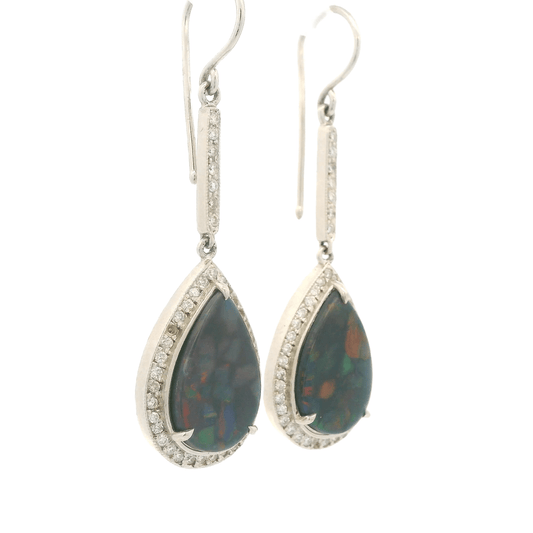
Introduction to Opal
Opal occupies a completely different category from most gemstones. Where stones such as sapphire or tanzanite are defined by a stable, singular color, opal is defined by movement — a shifting internal display of color that changes with light, angle, and perspective. This phenomenon, known as play-of-color, gives opal a visual depth that cannot be replicated by crystalline gemstones.
The result is a stone that is never static. Even the finest sapphire remains visually consistent, while a fine opal is constantly changing. This alone places opal in a unique position within the gemstone world, but it is only the beginning of what determines its value.
Unlike gemstones with standardized grading systems, opal must be evaluated holistically. Brightness, pattern, color range, and body tone all interact, and small differences in any of these factors can create dramatic differences in value.
Formation and Internal Structure

Opal forms in a way that is fundamentally different from most gemstones. Rather than
crystallizing under high heat and pressure, it develops at relatively low temperatures as silica-rich water deposits microscopic spheres into cavities within rock over long periods of time.
When these silica spheres align in a consistent, repeating structure, they diffract light, producing the play-of-color that defines precious opal. The size and uniformity of these spheres directly influence the colors that are visible. Larger spheres produce longer wavelengths such as red and orange, while smaller spheres produce shorter wavelengths like blue and green.
This structural requirement is extremely precise. If the spheres are not properly aligned, the stone will not display play-of-color at all, resulting in what is known as common opal. This is why fine opal is relatively rare compared to the total amount of opal material found in nature.
Opal also contains a small percentage of water within its structure. This contributes to both its appearance and its sensitivity, making it more delicate than gemstones such as diamond or sapphire.
Play-of-Color and the Role of Pattern
The presence of play-of-color alone does not determine the quality of an opal. The way that color is distributed — its pattern — plays an equally important role.
Some opals display broad, sweeping flashes of color that move across the surface, while others exhibit finer, more tightly packed points of light. These differences are not simply aesthetic; they reflect the internal organization of the silica structure.
Brightness remains the most important factor. A bright opal will display intense, clearly visible color even in lower lighting conditions. A stone with weak brightness may technically display multiple colors but appear muted or dull in comparison.
Color hierarchy also matters. Red is the rarest and most valuable color in opal, followed by orange, green, and blue. However, color alone is not enough. Without brightness and contrast, even a red-dominant opal can fall short of high value.
Harlequin Pattern: The Highest Expression of Opal

Structure
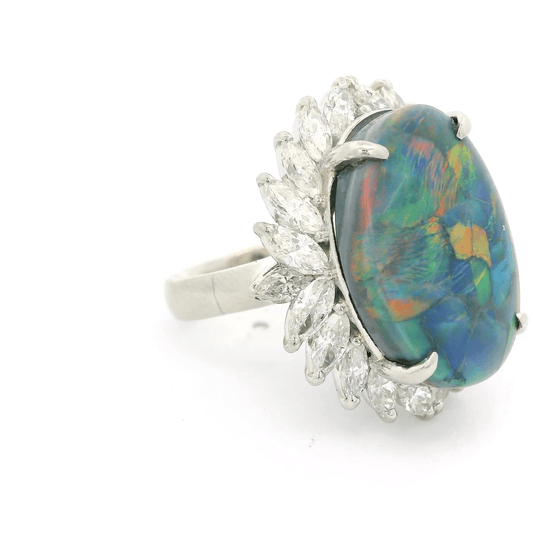
Among all opal patterns, the harlequin pattern represents the highest level of structural organization and rarity. It is characterized by a repeating arrangement of distinct, closely packed patches of color that form a mosaic-like appearance across the stone.
Unlike more common patterns, where color may appear scattered or irregular, a true harlequin displays a level of consistency and repetition that reflects an exceptionally uniform internal sphere structure. The color patches are typically well- defined and similar in size, creating a visual effect that appears almost geometric.
This level of formation is extremely uncommon. Even among fine opals, true harlequin patterns are rarely encountered, and stones that display them across a significant portion of the surface are considered exceptional.
The presence of red within a harlequin pattern elevates value even further. Because red is already the rarest color in opal, combining it with a structured, repeating pattern places the stone at the very top of the market.
It is important to distinguish between true harlequin and stones that are loosely described as such. Many opals exhibit patchy or block-like color, but without the consistency required for proper classification. In high-end gemology, this distinction is critical, as true harlequin opals represent a level of rarity that cannot be replicated.

Types of Opal
Opal exists in several distinct forms, each defined by its body tone and formation environment.
Black opal is the most valuable type, primarily due to its dark body tone, which provides contrast and allows color to appear more vivid. The finest examples are typically sourced from Lightning Ridge and are known for their intensity and depth.
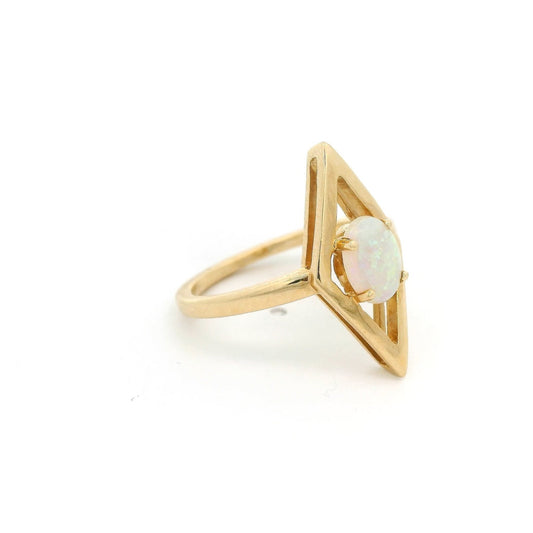
White opal, or light opal, has a pale base that softens the appearance of color. While still attractive, the reduced contrast generally places it below black opal in value.
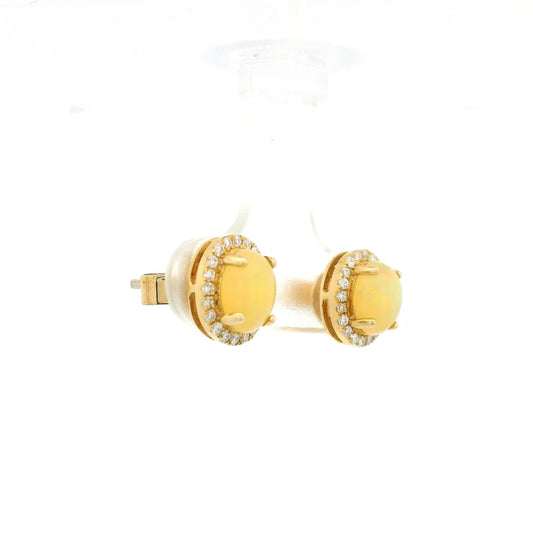
Fire opal differs in that it is often valued for its body color rather than its play-of-color. These stones range from yellow to deep orange and red, and while some display color play, many are prized for their clarity and saturation.
Boulder opal forms within ironstone, and when cut, part of the host rock is often left intact. This creates a natural backing that enhances durability and contrast, producing a very distinctive appearance.
Origins: Lightning Ridge and Global Sources
Certain locations have become synonymous with specific types of opal, and origin can significantly influence both appearance and value.
Lightning Ridge in Australia is widely regarded as the premier source of black opal. Stones from this region are known for their deep body tone and exceptional color play, often producing the highest-value material in the world.
Coober Pedy, also in Australia, is one of the largest sources of white opal and has historically supplied much of the global market.
Ethiopian opals, particularly from the Welo region, have become increasingly prominent. These stones often display vivid color but can be hydrophane, meaning they absorb water and may temporarily change in appearance.
Mexico is known for fire opal, particularly transparent stones with strong orange and red coloration.
Durability and Real-World Wear
Opal requires more care than many traditional gemstones. Its relatively low hardness makes it more susceptible to scratching, and its internal water content makes it sensitive to environmental changes.
While it can certainly be worn in jewelry, it is best suited for pieces that are less exposed to impact. Earrings and pendants are generally safer choices, while rings benefit from protective settings and mindful wear.
Rarity and Value
Opal valuation is more nuanced than most gemstones. There is no universal grading system, and each stone must be evaluated individually.
The highest-value opals combine strong brightness, a wide color range, and a rare pattern, particularly when red is present. Black opals with harlequin patterns represent the peak of the market, combining multiple layers of rarity within a single stone.
Because of this variability, expertise is essential when assessing quality. Two stones of similar size can differ dramatically in value based on subtle differences in structure and visual performance.
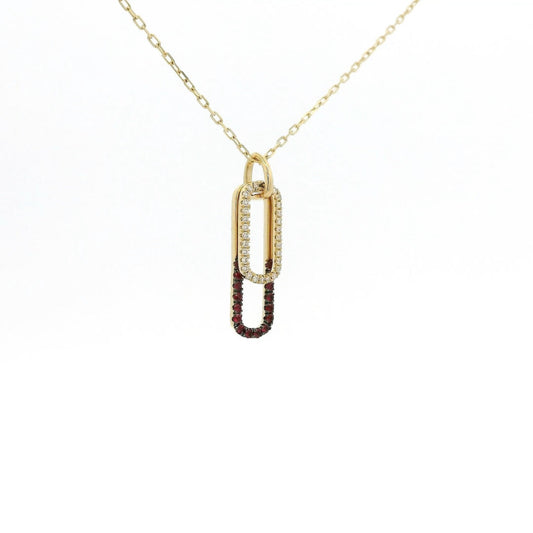
Opal Jewelry at Forever Rox Fine Jewelry
At Forever Rox Fine Jewelry, we focus on opals that demonstrate strong brightness, balanced color, and individuality. Each stone is selected based on how it performs in natural light, ensuring it maintains its character beyond the display case.