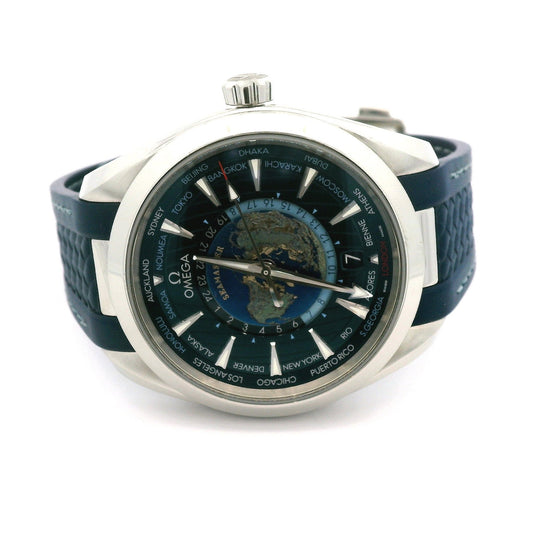
The Rolex Oyster Perpetual reference 6298 sits at one of the most consequential transitional moments in Rolex history. Produced in the early 1950s, it carries the Ovettone "Big Bubbleback" case architecture that defined two decades of Rolex automatic watchmaking, paired with the larger 36mm Oyster proportions and the 3-6-9 dial layout that would, in the same year, give birth to the Explorer line. The 6298 is not an Explorer — but it is the watch from which the Explorer was born. This deep-dive walks through the Bubbleback era, the Ovettone designation, the Pre-Explorer transitional references, the technical specifications of reference 6298, the 3-6-9 dial significance, and the vintage Rolex market context for a buyer evaluating this piece in 2026.
The Bubbleback Era: 1933 and the First Self-Winding Oyster
To understand the 6298, you have to start with what Rolex did in 1931 and 1933.
In 1931, Rolex patented the Perpetual rotor — the world's first self-winding mechanism with a weighted rotor capable of rotating a full 360 degrees. Other manufacturers had built automatic movements before, but the Rolex Perpetual rotor was the architecture that became the foundation for nearly every automatic wristwatch movement built since. In 1933, Rolex married that Perpetual rotor to its existing Oyster waterproof case (introduced in 1926) to create the first self-winding waterproof wristwatch — reference 1858, powered by caliber 520.
Combining a rotor with a waterproof case introduced an immediate engineering problem. The rotor needed vertical clearance inside the movement, and the rotor itself sat above the gear train. Rather than enlarge the case diameter, Rolex domed the caseback outward to accommodate the rotor's vertical depth. The result was a distinctive, half-spherical caseback profile that bulged out from the wrist.
English-speaking collectors called this the "Bubbleback." Italian collectors called it the Ovettone, from the Italian word uovo (egg), because the watch sat on the wrist with the high, rounded profile of an egg. Both names stuck.
Bubblebacks were produced continuously from 1933 through the early 1950s, in a wide range of references, dial configurations, case metals, and bracelet styles. By any reasonable count they are the most important and most collected family in pre-modern Rolex history.
The Ovettone: The Big Bubbleback of the Late 1940s
In the late 1940s, Rolex began producing larger Bubblebacks — most notably with the introduction of the Datejust line in 1945, which carried a 36mm case. These larger references received the "Big Bubbleback" nickname in English-speaking markets and the Ovettone designation in Italian collecting circles — Ovettone literally translating to "big egg," a reference to the larger, more pronounced domed caseback required to accommodate the thicker movement architecture.
At a time when most men's wristwatches sat in the 32mm to 34mm range, the 36mm Ovettone references were unmistakably oversized. Combined with the rounded caseback that pushed the watch up off the wrist, an Ovettone wears with a presence that small 1930s and early-1940s Bubblebacks simply do not have. This is the case architecture that the reference 6298 inherits.

The Pre-Explorer Transition: 1953 and the Birth of the Explorer Line
1953 is one of the most significant single years in Rolex history.
On May 29, 1953, Sir Edmund Hillary and Tenzing Norgay reached the summit of Mount Everest. Members of the British expedition wore modified Rolex Oyster Perpetuals supplied to the team for high-altitude testing. Later that summer, capitalizing directly on the marketing momentum of the successful summit, Rolex released the Explorer reference 6350— the first watch in Rolex's catalog to carry the "Explorer" name on the dial. The 6350 borrowed heavily from the Bubbleback architecture: the 36mm Oyster case, automatic Perpetual movement, screw-down crown, screw-down caseback. Its defining visual signature was a dial layout featuring large, bold Arabic numerals at 3, 6, and 9, paired with a triangular hour marker at 12 — the configuration that would come to define the Explorer aesthetic for the next 70+ years.
Reference 6298 sits directly inside this 1953 transitional moment. Produced contemporaneously with the very early Explorer references, the 6298 carries the same 36mm Oyster case, the same automatic Perpetual architecture, and — in many configurations — a 3-6-9 dial layout strikingly similar to the early Explorer dials. What the 6298 does not carry is the "Explorer" name on the dial.
For this reason, vintage Rolex collectors call references like the 6298 "Pre-Explorer" watches — not because they predate the Explorer chronologically (the dates overlap), but because they predate the formal Explorer branding and represent the design language and engineering DNA from which the official Explorer was developed. To collectors who care about Rolex's transitional moments and "first-of" historical references, the Pre-Explorer 6298 is among the most desirable vintage Rolex Oyster Perpetuals in the catalog.
The Caliber A296: Bubbleback Engineering at Its Peak

Reference 6298 is powered by the Rolex Caliber A296 — the final-generation automatic Perpetual movement of the Bubbleback architecture. The A296 carries forward the same fundamental design that Rolex pioneered with the caliber 520 in 1933: a centrally-mounted rotor, full 360-degree rotation, and a relatively thick movement profile that necessitates the domed caseback.
By the early 1950s the A296 had been refined across two decades of production, and it represents the most evolved version of the Bubbleback movement family. It is robust, time-tested, and serviceable — three of the most important attributes for a vintage automatic movement that may be 70+ years old by the time it reaches a contemporary collector. Within a few years of the 6298's production, Rolex would move to the thinner caliber 1030 (the first true "modern" Rolex automatic), which allowed the brand to abandon the bulbous Bubbleback caseback in favor of the flatter case profile that defined Rolex from the late 1950s onward. The A296 is, in this sense, the last word in Bubbleback engineering — and the 6298 is one of the last references to carry it.
The Dial: Silver, Restrained, and Quietly Important
The dial of reference 6298 is the feature that elevates it most decisively in the vintage market.
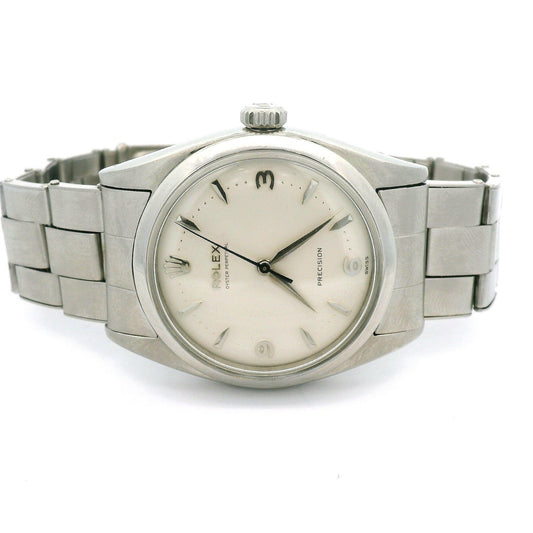
It is a silver dial with applied steel hour markers — slim daggers/wedges at the non-cardinal hours, paired with applied or printed Arabic numerals at 3, 6, and 9. The text reads "ROLEX / OYSTER PERPETUAL" beneath the Rolex coronet at 12 o'clock, and "PRECISION" above the 6 o'clock numeral, with "SWISS" at the very bottom edge. Hands are dauphine-style steel, period-correct for early-1950s Rolex production.
The "PRECISION" designation indicates that this watch carries a Rolex Perpetual movement (the A296) that was not certified to chronometer specification. In Rolex's mid-century nomenclature, "OYSTER PERPETUAL" alone signified an uncertified Perpetual movement; "OYSTER PERPETUAL OFFICIALLY CERTIFIED CHRONOMETER" signified a chronometer-grade movement. The "PRECISION" line was used on certain transitional dials of the era and is correct and original to specific 6298 production runs. Far from being a flaw, it is one of the markers that helps collectors authenticate a period-correct dial against later service-replacement dials.
The 3-6-9 Arabic numeral layout is what makes this dial collectible in 2026. That same layout — large 3, 6, 9 numerals at the cardinal positions, with markers at the other hours and a triangular index at 12 — is the visual signature that defines the Rolex Explorer line. The 3-6-9 dial of the 6298, executed with a dressier dauphine-and-dagger treatment rather than the bold sport-Explorer execution, gives the watch a quietly distinctive presence. Collectors increasingly view these elegantly-rendered 3-6-9 Pre-Explorer dials as the more sophisticated cousins of the bolder Explorer dials that followed.

The Case, Crystal, and Crown

The case is a three-piece stainless steel Oyster construction — bezel, midcase, and screw-down caseback — measuring 36mm in diameter, with the rounded Bubbleback caseback that pushes the watch up off the wrist. The bezel is smooth polished steel, and the crystal is acrylic, bezel-secured in the period-correct "Tropic" style of the era.
The crown is a Rolex screw-down Oyster crown — the 'brevet +' 6mm specification used on early-1950s Oyster references — engraved with the Rolex coronet on its outer face. Combined with the screw-down caseback and the bezel-secured crystal, the case provided the period-correct waterproof sealing that defined the Oyster line and gave Rolex its core marketing identity in the 1930s through 1950s. By contemporary standards the original waterproofing rating (~50m) is modest, but the Oyster construction principle pioneered in 1926 remains the foundation of every modern Rolex sport watch built today.
The Original Rivet Oyster Bracelet: A Material Value Driver
The watch wears on its original Rolex rivet Oyster bracelet — and this is not a small detail. In vintage Rolex collecting, the originality and period-correctness of the bracelet can materially affect both the value of the watch and the legitimacy of the piece in serious collector circles.
The rivet Oyster bracelet (sometimes called a "stretch rivet" or "riveted Oyster") was Rolex's standard sport bracelet from the late 1940s through the late 1960s, before being replaced by the folded-link and later solid-link Oyster bracelets that dominate modern Rolex production. Its construction is immediately distinguishable: the side links are joined by visible external rivets — small steel pins protruding through the link sides — rather than the seamless internal pins used on later bracelets. The clasp is the period-correct Rolex signed clasp, with the coronet engraved on the buckle face. It is the bracelet that period-correct buyers expect to see on a 1953 6298, and replacing it with any later or aftermarket bracelet would substantially diminish the watch's collector value and historical integrity.

Market Position and Pricing
The vintage Rolex market has shifted decisively over the past five years toward early sport references, transitional pieces, and "Pre-Professional" watches — exactly the category the 6298 occupies. Several forces have driven this shift: modern Rolex sport references have become difficult or impossible to acquire at authorized dealers, transitional references are increasingly viewed as more historically significant than mass-produced later references, original-condition examples of Bubbleback / Ovettone references have become difficult to source after 70+ years, and the 3-6-9 dial layout has become a particular collector focus.
The Example Currently in the Forever Rox Fine Jewelry Showcase
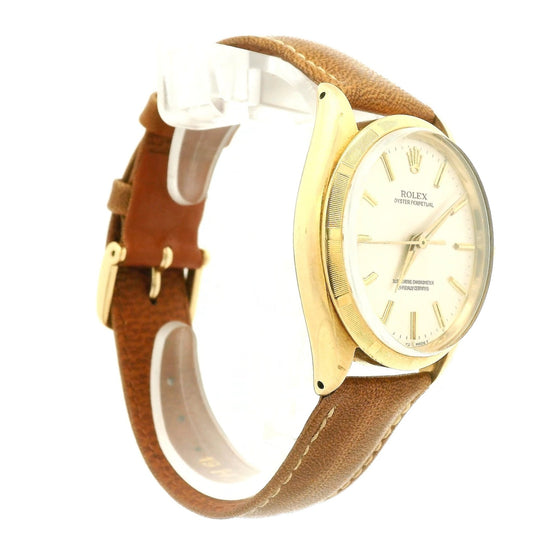
We currently have a Rolex Oyster Perpetual reference 6298 "Pre-Explorer" in stock at Forever Rox Fine Jewelry. The piece presents in excellent vintage condition with all of the originality markers that serious collectors specifically look for:
- Original stainless steel Oyster case with the unmistakable Big Bubbleback / Ovettone profile, lugs full and even
- Original silver dial with the 3-6-9 Arabic numeral layout, applied dagger indices, and "OYSTER PERPETUAL PRECISION" text — all displaying the soft ivory patina that period-correct buyers chase
- Original Rolex Caliber A296 automatic Perpetual movement
- Original screw-down Rolex Oyster crown with engraved coronet
- Original Rolex rivet Oyster bracelet with signed clasp
Nothing on this piece shows the typical warning signs that vintage Rolex authenticators flag — no service dial, no modern lume work, no aftermarket bracelet, no signs of heavy case reconstruction. It presents as an honest, attractive, all-original survivor — exactly what the contemporary vintage Rolex market is built around.
The piece is offered at a price commensurate with its all-original condition and the current vintage Rolex market for authentic 6298s in this configuration — $28,000. For serious vintage Rolex collectors based anywhere in Lake Tahoe, Reno, Carson City, Truckee, South Lake Tahoe, or anywhere else in the country, the watch is available for in-person evaluation at our Incline Village location, or for shipped purchase with full documentation, condition reports, and a return window. As an independent fine jewelry and luxury watch dealer authenticating and servicing vintage Rolex references for the Tahoe basin since 1984, Forever Rox Fine Jewelry handles vintage Rolex sales with the diligence that a piece of this collector significance requires.